The Silmarillion
Rather than being a single adventure story like The Hobbit or The Lord of the Rings, The Silmarillion is a collection of interconnected legends.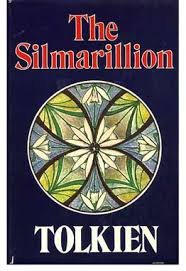
The Silmarillion was published in 1977, four years after the death of J. R. R. Tolkien in 1973. Unlike The Hobbit and The Lord of the Rings, it was not completed by Tolkien during his lifetime.
Tolkien had been developing the mythology that became The Silmarillion since around 1916–1917, long before The Hobbit was published in 1937. He envisioned these stories as the foundational legends of his invented world, later known as Middle-earth. Throughout his life he repeatedly revised, expanded, and reorganized the material, but never settled on a final version.
After the success of The Lord of the Rings in the 1950s, Tolkien hoped to publish The Silmarillion alongside or shortly after it. However, publishers found the work difficult to market because it resembled a mythological corpus rather than a conventional novel. The manuscript remained unfinished and continually evolving.
Christopher Tolkien's Role
After Tolkien's death, his son Christopher Tolkien undertook the enormous task of organizing thousands of pages of manuscripts, drafts, notes, genealogies, and linguistic materials.
Working with writer Guy Gavriel Kay, Christopher selected and combined texts from different periods of Tolkien's life to create a coherent narrative. In some places he had to bridge gaps between incompatible drafts, edit transitions, and make editorial decisions about which versions to include.
As a result, the 1977 Silmarillion is not a single manuscript written by Tolkien but a carefully constructed synthesis of many texts spanning roughly sixty years of development.
Report